Amylose Content in Rice: The Core Indicator Determining Rice Stickiness

Jul 17, 2025 By

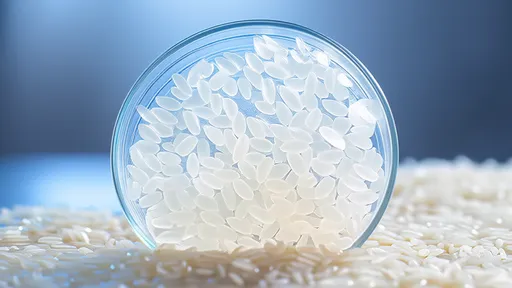
The texture of cooked rice, particularly its stickiness, is a defining characteristic that influences culinary preferences across cultures. While numerous factors contribute to rice quality, the amylose content of rice starch emerges as the single most critical determinant of this textural property. This invisible component within each grain holds the key to understanding why some rice varieties cling together while others remain separate and fluffy.

Amylose, a linear polymer of glucose molecules, constitutes one of the two main components of starch in rice endosperm. Unlike its highly branched counterpart amylopectin, amylose molecules tend to form more ordered structures during cooking and cooling. Rice varieties containing 20-30% amylose typically produce fluffy, separate grains ideal for pilafs or biryanis, while those with less than 20% yield the sticky rice preferred in many Asian cuisines. The precise amylose measurement has become so crucial that modern rice breeding programs use it as a primary selection criterion when developing new varieties.

The relationship between amylose content and stickiness follows a clear inverse correlation. During the cooking process, amylose molecules leach out from the starch granules and form networks between grains as the rice cools. Higher amylose concentrations create stronger intermolecular bonds that prevent grains from adhering, while lower levels allow the sticky amylopectin to dominate the texture. This explains why Japanese short-grain rice (typically 15-20% amylose) becomes perfectly sticky for sushi, while Basmati (22-28% amylose) maintains its distinctive separateness.

Climate conditions during rice growth significantly impact final amylose levels. Research demonstrates that higher temperatures during grain filling tend to decrease amylose content, resulting in stickier rice from the same variety. This environmental sensitivity poses challenges for consistent quality but also offers opportunities for growers to target specific markets by adjusting planting schedules. The phenomenon helps explain why the same rice variety may exhibit slightly different cooking properties across growing regions or seasons.

Traditional rice classification systems have long recognized these textural differences without understanding their biochemical basis. The terms "indica," "japonica," and "javanica" historically described rice types with distinct cooking qualities that we now know correspond to typical amylose ranges. Modern laboratory techniques like iodine binding assays and high-performance liquid chromatography have replaced subjective assessments, allowing precise amylose measurement down to 0.1% accuracy.

Consumer preferences for rice texture vary dramatically by region, creating distinct market segments. Southeast Asian markets predominantly demand low-amylose sticky rice for easy eating with chopsticks, while Indian and Pakistani consumers prefer high-amylose varieties that remain separate when mixed with curries. This cultural dimension adds economic significance to amylose content, with price premiums often attached to varieties that hit the ideal amylose target for specific culinary applications.

Rice processing methods can influence the apparent stickiness regardless of inherent amylose content. Parboiling, a hydrothermal treatment common in South Asia, gelatinizes the starch before milling and can make even high-amylose rice stickier than its native state would suggest. Similarly, different cooking techniques - water ratios, soaking times, pressure cooking - can somewhat modify the final texture, though they cannot fundamentally overcome the limitations set by the grain's natural amylose percentage.

Emerging research suggests amylose content affects more than just texture. Digestibility studies indicate that higher amylose rice tends to have a lower glycemic index, making it potentially more suitable for diabetic diets. The slower digestion rate occurs because amylose's linear structure forms more resistant starch than the highly branched amylopectin. This nutritional dimension adds another layer of complexity to breeding programs aiming to optimize multiple quality parameters simultaneously.

Modern genetic techniques have identified several genes controlling amylose synthesis, with the Waxy (Wx) gene being particularly influential. Different alleles of this gene produce varying amounts of granule-bound starch synthase, the enzyme responsible for amylose production. Breeders now use molecular markers for these genes to accelerate development of new varieties with precisely calibrated stickiness characteristics, reducing the need for extensive field testing of cooking quality.

The global rice trade has developed sophisticated testing protocols to ensure amylose specifications are met for different market segments. Export contracts frequently specify amylose ranges, and disputes occasionally arise when shipments fail laboratory analysis. This commercial reality underscores how a single biochemical parameter has become central to an international commodity market worth billions annually.

Looking ahead, climate change may disrupt traditional amylose patterns in rice-growing regions. As temperatures rise, historical growing areas may find their rice becoming stickier than desired, potentially requiring shifts in varietal selection or cultivation practices. Simultaneously, breeding heat-tolerant varieties that maintain consistent amylose levels under stress represents an active area of agricultural research with significant economic implications.

For home cooks puzzled by inconsistent rice textures, understanding amylose content provides practical guidance. Checking packaging for amylose percentages or rice type descriptions can help select the right variety for specific dishes. When unavailable, a simple water test - where high-amylose rice tends to sink while low-amylose varieties float - offers a rough indicator of likely cooking behavior.

The science of rice texture continues to evolve, with researchers investigating how amylose interacts with other components like proteins and lipids to influence final product quality. What remains unchanged is the central role of this unassuming starch molecule in determining one of humanity's most fundamental food experiences - the perfect bowl of rice, tailored to cultural tradition and personal preference alike.
Recommend Posts
Food

Acid Regulation: Changes in pH Value During Kimchi Fermentation

By /Jul 17, 2025

The art of fermenting vegetables into tangy, probiotic-rich pickles has been practiced for millennia across cultures, yet the delicate dance of microbial activity beneath the brine remains a subject of fascination for both home fermenters and food scientists. At the heart of this transformation lies a critical metric: pH. The logarithmic scale measuring acidity or alkalinity becomes the silent conductor orchestrating microbial succession, enzyme activity, and ultimately, the safety and flavor profile of fermented pickles.
Food

Enzymatic Fermentation: Protease Activity in Fish Sauce Production

By /Jul 17, 2025

The pungent amber liquid that elevates Southeast Asian cuisine owes its existence to an ancient biochemical process. Fish sauce, that irreplaceable umami bomb, emerges from a fascinating interplay between microbial fermentation and enzymatic breakdown. At the heart of this transformation lies protease activity – the molecular scissors that dismantle fish proteins into flavor-packed peptides and amino acids.
Food

Sodium Ion Migration: Osmotic Pressure Model of Salted Meat Curing

By /Jul 17, 2025

The science behind meat curing has fascinated food chemists for centuries, with sodium ion migration playing a starring role in this ancient preservation method. When we examine the osmotic pressure model that governs how salt penetrates muscle tissue, we uncover a remarkable interplay between physics, chemistry, and culinary tradition that transforms raw meat into savory, shelf-stable charcuterie.
Food

Oil Absorption Rate: A Study on the Porosity of Fried Food Coating

By /Jul 17, 2025

Fried foods hold a universal appeal, with their golden-brown exteriors and satisfying crunch. Yet, beneath that irresistible texture lies a complex interplay of chemistry and physics—particularly in how batters absorb oil during frying. Recent research has shifted focus to batter porosity, a critical but often overlooked factor determining oil uptake. Understanding this relationship could revolutionize how we approach fried food production, balancing indulgence with health considerations.
Food

Milk Fat Globule Membrane Protein: The Key to Cream Separation by Centrifugation

By /Jul 17, 2025

The dairy industry has long relied on centrifugal separation as a fundamental process for isolating cream from raw milk. At the heart of this mechanical marvel lies an often-overlooked biological component: the milk fat globule membrane (MFGM). This intricate protein-lipid structure not only determines the efficiency of cream separation but also holds untapped potential for nutritional and industrial applications.
Food

Amylose Content in Rice: The Core Indicator Determining Rice Stickiness

By /Jul 17, 2025

The texture of cooked rice, particularly its stickiness, is a defining characteristic that influences culinary preferences across cultures. While numerous factors contribute to rice quality, the amylose content of rice starch emerges as the single most critical determinant of this textural property. This invisible component within each grain holds the key to understanding why some rice varieties cling together while others remain separate and fluffy.
Food

Extraction Efficiency of Umami Compounds from Dried Shiitake Mushrooms

By /Jul 17, 2025

The culinary world has long revered dried shiitake mushrooms for their intense umami flavor, a characteristic largely attributed to their high concentration of flavor nucleotides. Recent research has shifted focus toward optimizing extraction methods to harness these compounds efficiently, revealing both challenges and breakthroughs in the process.
Food

Osmotic Equilibrium: Concentration Gradient of Candied Sugaring

By /Jul 17, 2025

The art of preserving fruits through sugaring has been practiced for centuries, a delicate dance between science and tradition. At its core lies the fascinating principle of osmotic equilibrium, where nature seeks balance even in the sweetest of preparations. This invisible force governs the transformation of fresh fruit into glistening candied delights, creating a symphony of flavors and textures that have graced royal tables and humble kitchens alike.
Food

Dough Extensibility: Carbon Dioxide Production During Proofing Time

By /Jul 17, 2025

The relationship between dough extensibility and carbon dioxide production during proofing is a critical yet often overlooked aspect of artisanal and industrial baking. While bakers traditionally focus on ingredients and mixing techniques, the silent alchemy of fermentation—where yeast metabolizes sugars into CO2—plays an equally decisive role in determining final product quality. This dynamic interplay between gas retention and gluten development reveals why some loaves achieve voluminous openness while others collapse into dense disappointment.
Food

Degree of Pectin Esterification: The Chemical Determinant of Jam Gel Strength

By /Jul 17, 2025

The world of food science constantly seeks to understand the intricate relationships between chemical composition and functional properties. Among these, the gelling behavior of pectin in jams and jellies stands as a fascinating case study. While numerous factors influence texture, the degree of esterification (DE) emerges as a pivotal chemical determinant of gel strength. This molecular characteristic doesn't merely affect consistency—it dictates the very architecture of the gel network, influencing everything from spreadability to mouthfeel.
Food

Photosynthetic Product: Light and Temperature Model for Sugar Accumulation in Hami Melons

By /Jul 17, 2025

The intricate dance between sunlight and temperature plays a pivotal role in determining the sweetness of honeydew melons, a phenomenon that has long fascinated agricultural scientists. Recent breakthroughs in photosynthetic modeling have shed new light on how these environmental factors interact to influence sugar accumulation in the fruit's flesh. At the heart of this process lies a delicate biochemical balancing act where plants convert light energy into the sugars that give honeydew its characteristic flavor profile.
Food

Thermal Quenching: The Key to Retaining Chlorophyll in Green Leafy Vegetables

By /Jul 17, 2025

The preservation of chlorophyll in leafy greens during thermal processing has long been a challenge for both food scientists and culinary professionals. While heat treatment is necessary to ensure food safety and extend shelf life, it often comes at the cost of vibrant green color – a visual marker of freshness that significantly influences consumer acceptance. Recent advances in understanding the time-temperature relationship during blanching have revealed surprising opportunities to maximize chlorophyll retention without compromising food safety standards.
Food

Crystallization of Sugar Solution: Control of Saturation for Rock Sugar Formation

By /Jul 17, 2025

The art of rock sugar production is a delicate balance between science and tradition, where the precise control of saturation levels determines the quality, size, and clarity of the final crystals. Unlike ordinary sugar refining, rock sugar formation relies on a carefully orchestrated supersaturation process that encourages the growth of large, well-defined crystals over time. This centuries-old technique transforms simple syrup into translucent gems of sweetness through a patient dance of temperature, concentration, and time.
Food

Oil Seal Isolation: Antioxidant Protection Mechanism of Duck Gizzards

By /Jul 17, 2025

The intricate biological mechanisms that protect animal tissues from oxidative damage have long fascinated scientists. Among these, the peculiar case of duck gizzard preservation through oil-sealed isolation presents a remarkable example of natural antioxidant protection. This phenomenon, observed in traditional food preservation methods, reveals sophisticated biochemical adaptations that could inspire innovative approaches to food science and oxidative stress management.
Food

Collagen Transformation: Gelatin Formation Temperature in Braised Beef Tendons

By /Jul 17, 2025

The transformation of collagen into gelatin during the slow cooking of beef tendons is a fascinating interplay of chemistry, temperature, and time. This process not only defines the texture of dishes like braised beef tendon but also unlocks nutritional benefits that make it a prized ingredient in both traditional and modern cuisine. Understanding the precise thermal breakdown of collagen reveals why certain cooking methods yield superior results.
Food

Cell Turgor Pressure: The Water Support Behind the Crisp and Tender Texture of Bamboo Shoots

By /Jul 17, 2025

The crisp, succulent texture of bamboo shoots has long delighted culinary enthusiasts across Asia, but few appreciate the intricate cellular mechanics behind this unique mouthfeel. At the heart of this phenomenon lies an often-overlooked botanical marvel: turgor pressure, the hydrostatic force that transforms rigid plant cells into nature's edible water balloons.
Food

Molecular Basis of Glutenin Ratio for High-Gluten Flour Stretching

By /Jul 17, 2025

The molecular basis of dough extensibility in high-gluten flour is deeply rooted in the unique properties of wheat gluten proteins, particularly the ratio between gliadin and glutenin. These two protein fractions form a viscoelastic network when hydrated, creating the structural backbone that gives wheat dough its characteristic stretch and strength. While gliadins contribute primarily to viscosity and extensibility, glutenins are responsible for elasticity and dough strength. The interplay between these components determines the functional performance of flour in baking applications.
Food

Intramuscular Fat: The Principle of Fat Deposition in Snowflake Pork

By /Jul 17, 2025

The marbling phenomenon in pork, often referred to as "snowflake pork," has captivated both culinary experts and meat scientists alike. This intricate pattern of intramuscular fat deposition not only enhances flavor and tenderness but also represents a fascinating interplay of genetics, nutrition, and animal physiology. Understanding the science behind this fat deposition reveals why certain cuts command premium prices in global markets.
Food

Nodule Bacteria Symbiosis: Field Observations of Soybean Nitrogen Fixation

By /Jul 17, 2025

The relationship between soybeans and rhizobia represents one of nature's most fascinating symbiotic partnerships. Across countless fields worldwide, this invisible collaboration quietly fuels agricultural productivity while reducing dependence on synthetic fertilizers. Farmers and scientists alike have long marveled at how these two organisms communicate through sophisticated biochemical signals to establish their nitrogen-fixing cooperation.
Food

Muscle Fiber Bundle Density: The Anatomical Basis for the Tenderness Difference between Beef Shin and Tenderloin

By /Jul 17, 2025

The tenderness of beef cuts has long fascinated both culinary experts and meat scientists alike. Among all the factors influencing meat texture, the density of muscle fiber bundles stands out as a fundamental anatomical characteristic that creates dramatic differences between tough cuts like beef tendon and tender cuts like tenderloin. This structural variation explains why these two muscle groups behave so differently during cooking and mastication.